

A useful moving complaint tells a reader what happened, when it happened, which company was responsible, and which record supports each point. It does not require a dramatic narrative. A page of dated events can show a changed price after loading, an unexplained carrier switch, or repeated delivery promises more clearly than a long account written from memory weeks later.
For an interstate household move, the Federal Motor Carrier Safety Administration asks complainants for company details, origin and destination, U.S. DOT and MC numbers if available, specific alleged conduct, and core moving documents such as the estimate, bill of lading, and inventory. FMCSA’s moving complaint guidance says reports may help it decide which companies to investigate. A chronology can make that evidence easier to review. It is not a substitute for a written loss-or-damage claim with the carrier, and filing it does not promise an individual refund.
Decide the scope before writing
Name the problem in one sentence. “The carrier demanded an additional $1,400 at delivery after loading under a signed nonbinding estimate” is a scope. “Everything about the move was terrible” is not. If there are separate issues—carrier identity, pickup damage, late delivery, and final charges—make each one a labeled thread within the same factual timeline or prepare separate summaries for different recipients. This helps avoid mixing a loss claim with a regulatory allegation.
Identify the entity for each event. The website where you booked may belong to a broker. The estimate may name one carrier, the truck another, and the bill of lading a third. Do not assign an action to the broker just because it answered your first call. Record the legal name shown on the document, the person you spoke to, and the role they claimed. If uncertain, write “caller said they were carrier dispatch; company not independently confirmed.” That is more reliable than filling the gap with an assumption.
Record the route. An interstate move can cross a state line over a short distance; a long move entirely inside one state is usually subject to state authority. If you are unsure, compare pickup and delivery addresses and the shipping arrangement. FMCSA’s complaint center is for issues involving entities it regulates, including interstate movers and brokers. A state regulator may be the better destination for an intrastate move, but the chronology method is the same.
Separate what you want from what you suspect. You may want the carrier to release goods, reimburse a broken table, correct a bill, or answer a regulator’s inquiry. Each route has different requirements. A complaint to FMCSA can report possible violations and may prompt an investigation; FMCSA says it cannot resolve your individual loss-and-damage claim. Keep the remedy request in a separate line so the chronology remains a factual account.
Build the timeline from original records
Start with booking. Enter the date of the first written estimate, whether it was binding or nonbinding, the quoted amount, the carrier or broker named, and the services described. Link that entry to the saved estimate. If the price was discussed by phone before the written estimate, say “sales call: representative said approximately $X” and identify any note or email that confirms it. A memory of a phone quote is weaker than a signed estimate; the chronology should show that difference.
Add each contract change in date order. A new estimate, revised inventory, added stop, packing request, or amended delivery date deserves its own event. State who proposed it, who accepted it, and when. Preserve both the earlier and later documents. If the company claims you agreed by phone but you do not remember doing so, write that as a disputed assertion, not as an established fact or a proven lie. Ask for the company’s record of consent.
Then record pickup. Note the actual arrival and loading times, the company and vehicle markings, the driver’s name if given, the bill-of-lading number, and when you received copies. If the carrier identity differed from the booking papers, capture the exact mismatch and the explanation offered at the time. If the crew recorded condition marks you disagreed with, cite the page and item number. A pickup event should point to the carrier’s inventory and bill of lading, not merely a photo of a truck.
During transport, add substantive communications. Include delay notices, promised delivery periods, storage notices, requests for more payment, and your replies. A timeline does not need every “checking in” text. It needs the messages that changed the plan, communicated an obligation, or showed that you sought an answer. For a missed call, note the call attempt and whether you left a message, but do not describe the absence of a callback as proof of where the truck was.
At delivery, record the driver’s arrival, amount demanded, amount paid or offered, what unloaded, the inventory numbers still missing, and the delivery document you signed. If a truck left without unloading, state the time and the reason the driver gave. Keep the invoice and payment proof. If you later learn a carton was on another vehicle, add a new dated entry rather than editing the original “not delivered” observation to make it look as though you knew that at the door.
Use a clear entry format
A single event can fit on one or two lines: “June 8, 10:42 a.m. ET — carrier dispatch, phone ending 4567, said delivery would move from June 9 to June 12. I asked for written notice. Evidence: call log, follow-up email sent 11:03 a.m.; no written notice received by June 10.” This entry separates the reported statement, your action, and the supporting records.
Use dates with years and time zones when relevant. A move crossing zones can otherwise make a call appear to happen before an email it answered. If you do not know the exact time, write “afternoon, approximate” rather than inventing a minute. If the date comes from a document’s timestamp, say so. If it comes from your memory, label it as recollection. Honest uncertainty does not make the chronology useless; concealed uncertainty can make it unreliable.
Number the supporting files in a way that matches the entries: E01 signed estimate, E02 revised order, E03 pickup bill of lading, E04 carrier email. Keep originals unchanged. You may add a cover sheet that points to page numbers or item numbers. Do not crop a document so tightly that the company name, date, or signature disappears. Redact sensitive information only when appropriate for the recipient; keep the complete original in your own file.
Keep the main chronology concise. An investigator or claims handler can open an attachment for detail. Repeating a five-page email inside the timeline makes the key events harder to see. Quote only the short phrase that matters, such as “delivery on June 12,” and cite the message. Avoid adjectives like “fraudulent” or “illegal” in the event line unless you are quoting someone. Describe the conduct and let the recipient assess its legal meaning.
Know what each record can and cannot show
A signed estimate shows the price method and described scope at that date. It may not include services added later. A bill of lading identifies the carrier and shipping terms when the goods were loaded, but a partially complete bill may not yet show final weight. An inventory shows what the carrier recorded as taken and its noted condition; it does not prove every carton’s contents. A weight ticket shows a scale measurement and still needs to be connected to your shipment and calculation.
An email shows that a message was sent from an account at a time; it does not always prove the recipient read it or agreed. A phone log shows that a call was placed or received, not what was said. A screenshot of a tracking portal shows what the portal displayed, not the truck’s exact location. A receipt shows money changed hands; it may not explain whether the charge was proper. Put each piece of evidence to the narrow use it supports.
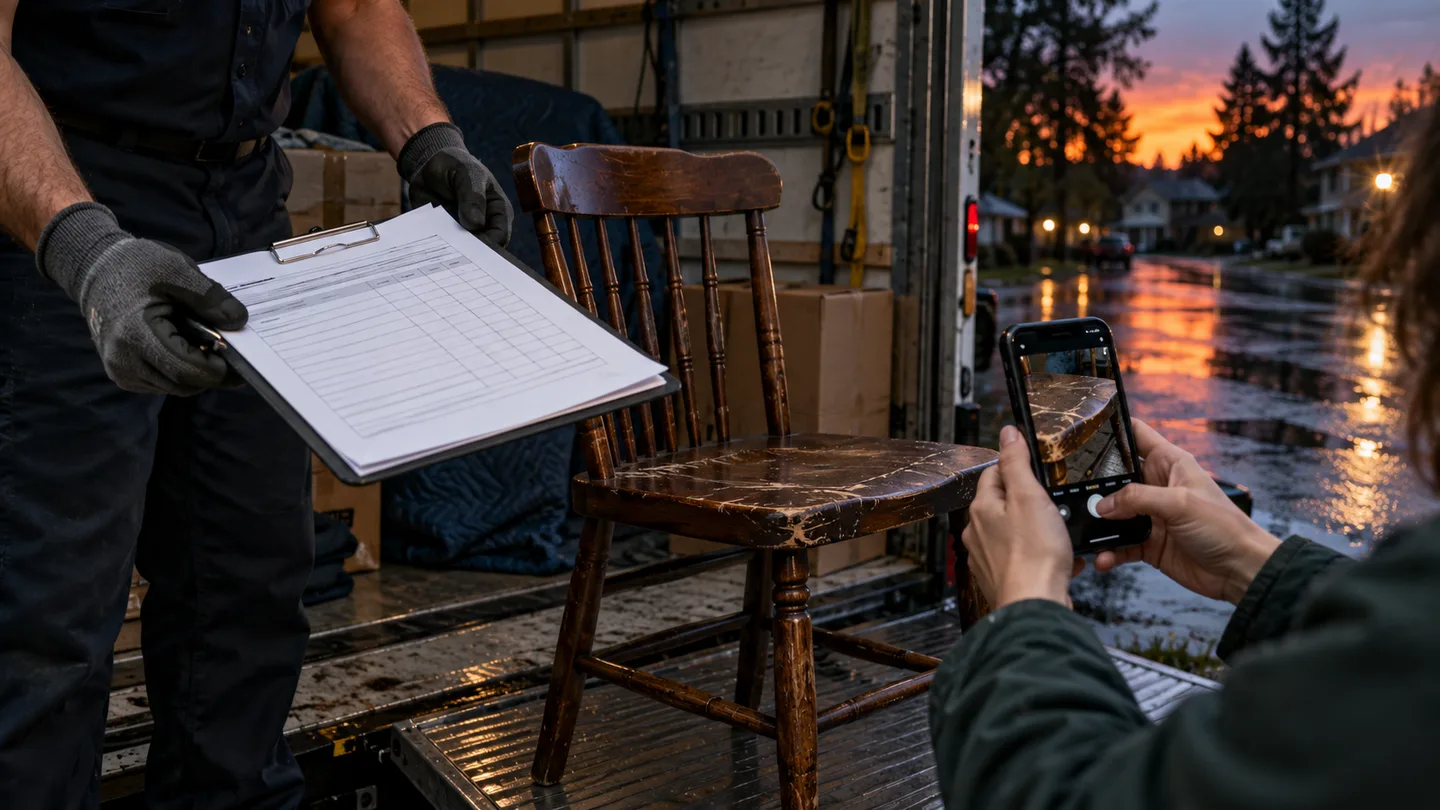
Photographs can clarify a damaged item or a vehicle number when their date and context are known. They rarely establish a whole contract on their own. If you took a photo after delivery, do not label it “condition at pickup.” If the metadata date is wrong because your camera clock was wrong, say so and use another record to place it in the sequence. The chronology should make a plausible account, not conceal facts that might complicate it.
A company’s silence also has limits. Record the dates you asked for a document and any response. “No reply received by July 1” is a fact about your inbox; “carrier admitted the charge was invalid” is not. If you contacted the wrong email address, correct that before treating silence as meaningful. Keep delivery failures or bounced emails with the file.
Link the chronology to a specific issue
For a price dispute, identify the governing estimate, any revised estimate, the amount demanded at delivery, payments, final bill, and the carrier’s explanation. State the arithmetic in a separate note so the event timeline stays readable. If an added service is disputed, identify the first time it appeared and whether there is a signed or written request. A claim that “the price doubled” is less useful than the original and final amounts with dates and scope.
For a carrier-identity problem, show the legal names and U.S. DOT numbers from the booking materials, truck markings, bill of lading, and any assignment message. Do not infer that a different truck always means fraud; ask for the agent or substitute arrangement. The chronology should show when you first learned the identity and what explanation the company gave.
For missing or damaged goods, use the inventory and delivery notations to identify item numbers. The chronology can show when the item was loaded, when you found the problem, and when you notified the carrier. It does not replace an itemized claim. A written loss-or-damage claim with the mover has its own requirements and deadline. The written mover-claim guide explains that submission route. Keep the carrier claim separate from a report to FMCSA about possible mishandling of the claim process.
If a separate insurance policy may cover the same loss, the chronology can help both recipients, but their forms and deadlines may differ. The mover-versus-insurance claim guide explains the distinction. Do not send a policy claim only to the mover or assume the insurer will file the mover claim for you.
For a delay complaint, identify the dates or periods in the order for service and bill of lading, each notice of delay, the alternative dates proposed, and your availability. A later delivery date does not automatically show that the carrier failed to notify you; the chronology should include the notices it actually gave. If you requested a postponement, include that request. A balanced record is more credible and helps identify the real point of disagreement.
Example: turn scattered records into a readable account
Suppose a household booked an interstate move in April. The initial written nonbinding estimate was $4,000 for the listed goods. A broker sent the booking email, but the assigned carrier was named later. On pickup day in May, a different truck arrived. The driver showed a bill of lading naming the assigned carrier, and the customer signed it after calling the carrier office. At delivery a week later, the driver requested $5,900 and said the difference was due to weight and a shuttle. The customer paid part of the bill, recorded the amount, and received the goods. Two days later, the carrier emailed weight tickets and an itemized invoice.
A useful chronology would give the date and document for the $4,000 estimate; the date the carrier was identified; the date and name on the bill of lading; the truck-name discrepancy and the office explanation; the delivery demand and payment; and the date the supporting invoice arrived. It would not state that the carrier “hid its identity” if the assignment email and bill of lading disclosed it before loading. It would not say the shuttle was imaginary without checking whether access required one. Those are questions to investigate.
The complaint narrative can then be narrow: “I believe the carrier demanded more than the amount permitted at delivery; the estimate, bill of lading, invoice, and payment record are attached. I asked the carrier on June 2 to explain the delivery calculation and received the attached response on June 5.” If the carrier’s response shows an authorized later service, the narrative should acknowledge it. If the response does not address the $1,900 difference, say which line remains unexplained. This format gives an investigator a path through the evidence without asking the investigator to infer facts from a folder name.
A similar approach works for loss or damage, but the factual packet must also identify the item and carrier’s pickup and delivery notations. The written claim seeking payment belongs with the carrier even if you also report a regulatory concern. A chronology helps both readers find the relevant records; it cannot merge the two procedures into one filing.
Prepare the submission packet
FMCSA’s complaint instructions say the Complaint Center asks for information about the company, incident, allegations, contact details, and file uploads. Its moving-fraud page specifically lists estimate, bill of lading, and inventory pages as useful attachments. Check the current portal for accepted file types and size limits before preparing uploads; those settings can change. Make a short index so a reader knows which attachment supports which event.
Review the packet once for private data. A bill of lading may contain your former and current addresses and phone number. FMCSA needs enough detail to identify the shipment, but you should not post the packet publicly. If you submit to an insurer, carrier, attorney, or state regulator, tailor the set to that recipient’s request. Keep a complete master copy for yourself.
Submit only when you can state the facts accurately, but do not wait for every possible document if a deadline or urgent withheld-shipment situation requires action. Mark missing records as “requested from carrier on [date].” Save the confirmation number and a copy of the narrative you submitted. If the portal later asks for more information, answer by referring to the original event numbers and add new evidence as a supplement. Do not silently revise an old screenshot or timeline entry.
If a claim or complaint concerns an in-state move, use the state’s required form or consumer channel. Federal interstate document and complaint rules may not apply. The same chronology can still help a state agency or the mover understand the sequence, provided it uses the correct company and route. The point is to make the events inspectable: what was agreed, what changed, what was delivered, what was paid, and what the company said when you raised the problem.
Sources
- FMCSA, File a Moving Fraud Complaint
- FMCSA, How to File a Complaint
- FMCSA, What if there are problems?
- FMCSA, Transportation of My Shipment (Subpart F)
- FMCSA, Moving Checklist